The primogenitor of a important family, his Tata Group put an unforgettable stamp on Indian life while acquiring British brand names like Tetley Tea and Jaguar.
Ratan Tata, one of India’s most important and admired czars , who converted his family’s business empire, the Tata Group, into a transnational pot with encyclopedically recognizable brands, failed on Wednesday in Mumbai.
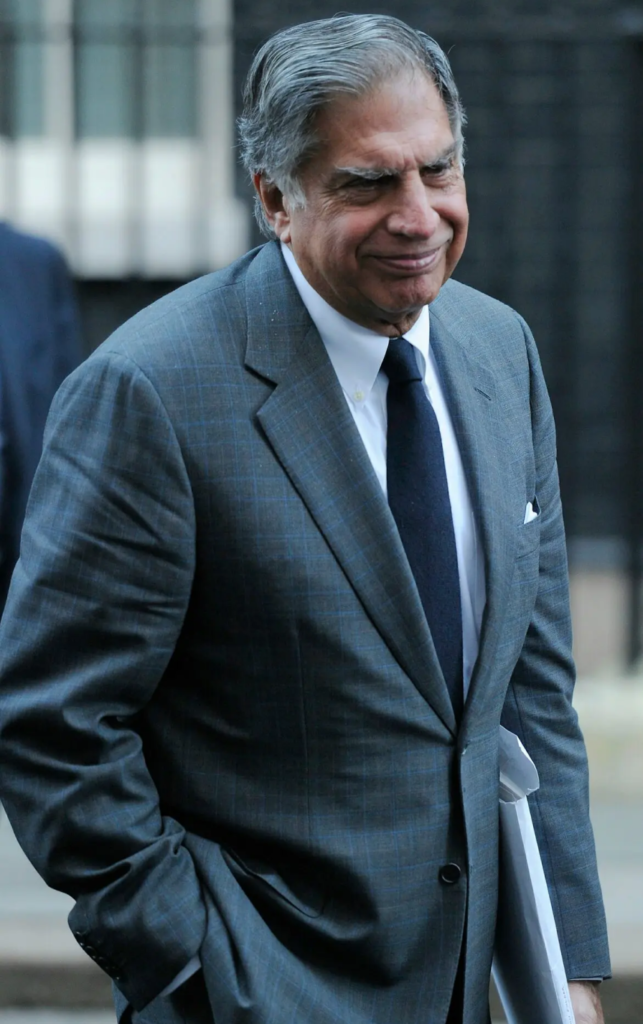
He was 86. The Tata Group blazoned his death in a statement, which did n’t specify a cause. He’d been treated in a critical care unit of a sanitarium, Reuters reported.
During his 21 times as president and principal superintendent, from 1991 to 2012, the Tata Group’s gains multiplied 50 times, with utmost earnings coming from deals abroad of similar recognizable Tata products as Jaguar and Land Rover vehicles and Tetley teas.
Despite the empire’s transnational outreach, its impact at home remained lesser than ever under Mr. Tata’s leadership. For middle- class Indians, it was nearly insolvable to get through the day without buying Tata goods and services.
They awoke to Tata tea, browsed the internet with Tata Photon, watched Tata Sky programs on TV, rode in Tata hacks or drove their own Tata buses , and used innumerable products made with Tata sword. morning in the 2010s, other family- led business groups battled or caught the Tata Group in earnings and valuation.
But none of the new czars enjoyed the public regard of Mr. Tata, who was famed for outlaying a maturity of his wealth to philanthropy and for his investments in incipiency businesses by youthful, underfinanced entrepreneurs. The unusual power structure of the Tata Group added to Mr. Tata’s appeal.
The parent company, Tata Sons Pvt. Ltd., held the maturity shares and was itself two- thirds- possessed by humanitarian trusts endowed by Tata family members. Tata preferred to stay out of the spotlight and projected a public image of a shy nonconformer, a man who noway married or had children.
But he came entangled in a major contestation late in his career when he induced Tata’s board to oust his culled successor. The preceding legal contestation took times to resolve and was a subject of constant media attention.
Ratan Naval Tata was born on Dec. 28, 1937, in Bombay, now Mumbai, during the British Raj. His family belonged to the Parsi ethnical community, whose Zoroastrian ancestors fled persecution in Persia centuries agone and set up retreat in India. Mr. Tata came a leader of that community.
The Tatas made their fortune in the 19th- century opium trade with China and in cloth manufactories. By the time Ratan’s father, Naval Tata, rose to come deputy president of the family business, the Tata Group was rooted in scores of manufacturing and marketable enterprises.
I had a happy nonage, but as my family and I got aged, we faced a fair bit of ragging and particular discomfort because of our parents’ divorce, which in those days was n’t as common as it’s moment, ” Mr. Tata recalled in a three- part Facebook interview posted in 2020.
He grew up in a white Baroque reanimation- style structure in Mumbai known as Tata Palace, with a staff of 50 retainers, and was driven to academy in a Rolls- Royce. He was transferred to the United States for high academy at the Riverdale Country School in New York City.
He graduated from Cornell University with an armature degree and latterly took operation courses at Harvard University Business School. Tata maintained a restrained social life.
He devoted much of his rest time to driving sports buses , piloting aeroplanes and contending his motorboat out of the harbor near an apartment he kept in Mumbai. His survivors include his mammy, Simone; his youngish family, Jimmy; a partial family, Noel; and two partial sisters, Shireen and Deanna Jejeebhoy.
Tata joined the family business in 1962, originally working on the shop bottom of Tata Steel. He also rose steadily through operation positions. His single reversal was at the empire’s worried electronics attachment, which he originally succeeded in turning around only to have it collapse during an profitable retardation.
Times latterly, the attachment, again came profitable, especially in satellite communication. In 1991, J.R.D. Tata stepped down after a half- century as president of Tata Sons and the Tata Group, and turned over leadership of the empire to RatanTata, who belonged to a different branch of the Tata family.